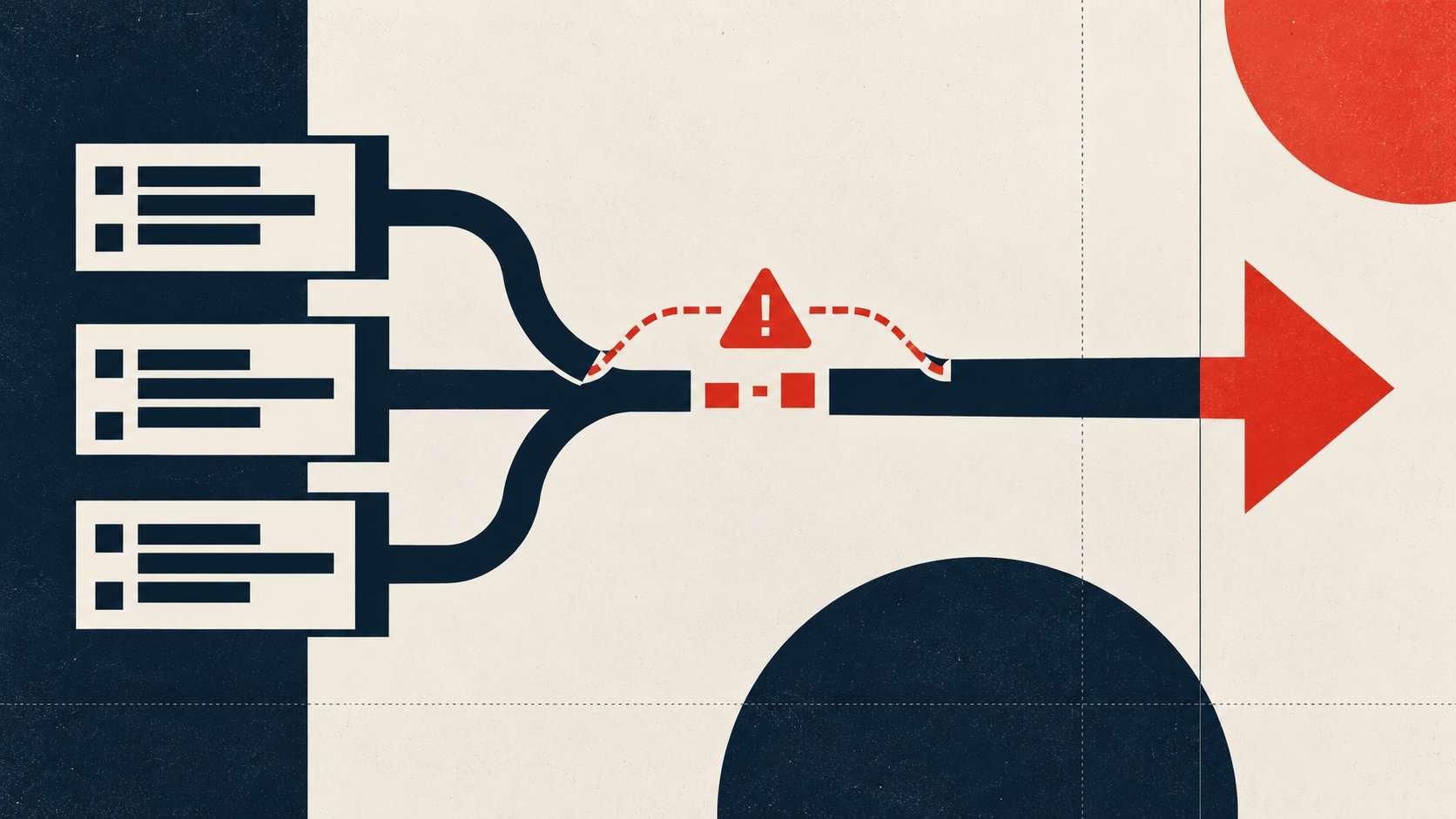

TL;DR In a 2026 analysis, half of customers who eventually bought again placed their second order within 30 days. That makes the first month a useful time to stay in touch, although the timing alone cannot show that messages caused those orders.
Postscript’s benchmarks show less immediately attributed revenue per post-purchase text than per cart or back-in-stock text. Those figures do not measure incremental profit, so they cannot settle which flow has the best return.
To find out whether your flow creates second purchases, randomly withhold it from some eligible first-time buyers and compare their results with those who receive it.
This guide gives you a starting message schedule, a workable holdout design, a sample-size estimate and a way to calculate the added contribution from your flow.
Selling in Greece or elsewhere in the EU? Marketing SMS needs consent or a narrow existing-customer exception, with an opt-out in every message.
The first order gives a brand a good reason to contact a customer, and many playbooks recommend a text within 24 hours. A timely thank-you may reassure someone who has just ordered, but it cannot tell you whether later marketing messages will bring that person back.
Repeat purchases often arrive in the following weeks among customers who return, but the right timing depends on the product and the delivery experience. The stronger claim, that post-purchase texts produce the highest return of any owned-channel activity, requires a proper comparison.
Start with a useful flow, then test what it adds beyond the orders customers would have placed anyway.
Why the first 30 days matter
The underlying problem is old and well documented. RJMetrics’ study of 176 online retailers and 18 million customers found that only 32% of customers came back for a second order within a year. Most first-time buyers never return.
Newer data shows when returning customers tend to buy again. reOtter analysed 156,000 customers in 2026. Among the 40,397 who bought again, 50.3% placed their second order within 30 days, 76.4% within 90 days, and only 3.7% waited longer than a year. In a separate analysis of 7,454 second-purchase journeys, 77% reordered the exact same product. These figures describe customers who returned, rather than the share of all first-time buyers who will do so.
“the second purchase isn’t a discovery problem, it’s a timing problem.”
Eightx, a fractional CFO firm working with 35+ DTC brands, puts the median time to second purchase at 15 to 35 days (15 to 27 for apparel and beauty). It warns that the 50 to 100 day “average” most dashboards show pushes brands to build flows that start too late. Averages get dragged up by the few who return months later; the median shows when a typical customer comes back.
Do this first: export your orders and measure days from the first to the second purchase for your leading product categories. Look at recent cohorts only after they have had enough time to complete the window you are measuring, and use your product’s actual reorder pattern to time replenishment messages.
What the benchmarks measure
Postscript’s 2026 benchmarks, drawn from more than 17,000 Shopify stores, show post-purchase texts earning $0.34 to $1.53 in attributed revenue per message across the middle half of stores. Abandoned-cart texts earn $3.52 to $10.95, and back-in-stock texts $5.92 to $13.34. Post-purchase beats broadcast campaigns ($0.11 to $0.55), but high-intent cart and stock alerts capture more sales close to a message. These figures describe attribution, so they cannot rank the flows by incremental return.
Email tells the same story. In BS&Co’s analysis of 14 ecommerce brands, the post-purchase flow had the highest open rate of any flow at 58%, yet revenue per recipient of only $0.47, against roughly $3.55 for abandoned checkout.
And the famous “$36 for every $1” email ROI? It comes from Litmus surveys where marketers self-report returns on email as a whole (nearly 500 respondents in 2025). It says nothing specific about post-purchase SMS.
A post-purchase flow may still be valuable because its main job is to make a second order more likely in the following weeks. An attribution window built around a single message may miss that effect, while it may also claim an order the customer would have placed anyway.
“Post-purchase is high-engagement, low-CR – measure it by repeat purchase, not by attributed orders.”
A random holdout measures the difference more directly. Compare customers offered the flow with otherwise eligible customers withheld from it, and assess the size and uncertainty of the result rather than treating attributed orders as proof.
For the comparison to mean anything, you need to build the flow and the test together. Decide which first-time buyers can receive marketing, what each message should do, and how to keep the holdout free of those messages.
The steps below take you from that setup through the message schedule, customer assignment, sample size, and the final check on whether the flow earns more than it costs.
A. Get the plumbing right
- Connect your store to your email/SMS platform so a “placed order” event triggers the flow (that’s how Klaviyo’s post-purchase flows start). If it also receives fulfilment or delivery events, use them for later messages so timing follows the parcel, not the calendar.
- Collect SMS marketing consent at checkout with its own unticked checkbox, kept separate from order updates. You need this in the EU (see the section on Greece below), and it’s good practice everywhere.
- Split first-time buyers from repeat buyers at the very start of the flow. Klaviyo suggests a condition of “placed order equals 1 over all time.” Keep it that simple: one merchant on the Klaviyo Community found that an extra item-count condition sent first-time customers who bought two items down the repeat-buyer path.
- Write down the baseline share of first-time buyers who placed a second order within 30, 60 and 90 days. Use cohorts old enough to complete each window, and define eligibility for email and SMS before you start the experiment.
B. Build the flow, message by message
Use the schedule below as a starting point for first-time buyers, then adjust it for delivery time, the product’s expected life and the ways your customers actually reorder. The first 24 hours should help customers feel confident about the order rather than ask them to shop again.
| When | Channel | What the message does |
|---|---|---|
| Immediately after the order | Email (transactional) | Order confirmation. Thank them, confirm what they bought and when it is expected. Send it immediately as an operational message. |
| Within 24 hours | SMS (only if consented) | An optional short thank-you explaining what happens next, only where this extra SMS is appropriate and permitted. Avoid a discount or shop link, and do not send a duplicate of the order confirmation. |
| When the order ships | Email or SMS (transactional) | Tracking link and expected delivery date. |
| 24 hours before estimated delivery | SMS | An arrival update if the delivery estimate is reliable, with one useful first-use tip. Skip the message if delivery timing is uncertain. |
| 2–3 days after delivery | How to use and care for the product. Answer your most common support question before they have to ask it. | |
| 7–10 days after delivery | Check-in and review request, once they have actually used the product. | |
| 14–21 days after delivery | Email, then SMS if no click | A relevant next product or offer tied to what they bought, followed by SMS only if the customer is eligible and the extra message is worth testing. |
| 5–7 days before expected depletion (consumables) | SMS | Replenishment reminder for the same product, with a one-tap reorder link. |
| Day 30–45, still no second order | Last nudge. For durable products, an accessory or complementary item instead of "buy again". |
A few rules apply across the flow. Anyone who places a second order exits the marketing sequence immediately, while customers who cannot receive SMS should get an email version only when they can lawfully receive marketing email. Durables with long repurchase cycles should cross-sell accessories or consumables rather than push “buy it again” (a point Eightx makes). Scigrowth’s 2026 playbook suggests 6 to 8 emails over 30 to 60 days for first-time buyers, and just 2 or 3 for repeat buyers.
For consumables, time replenishment from your data, not pack size: if customers reorder a 30-day supply at day 28, remind them around day 21 to 23.
“a relationship-building tool that happens to drive retention”
C. Decide what goes to SMS and what stays in email
SMS asks for more attention and usually costs more than email, so reserve marketing texts for useful, timely moments such as replenishment or a relevant offer. Leave longer product education and storytelling to email, and treat two to four marketing texts over 30 to 60 days as a starting limit to test against opt-outs and incremental sales. Keep operational delivery updates separate from that count.
The reason to be stingy is unsubscribes. A 2026 randomized field experiment at an online retailer (Baek, Chen, Ma and Mitrofanov) found that sending fewer emails cut unsubscriptions by 59%, at the cost of 5 to 8% lower short-term revenue, and linked unsubscribing to a 36% drop in a customer’s monthly revenue. An older Bluecore study found post-purchase emails triggered the most unsubscribes of any email type.
Business owners describe the same tension. One Etsy seller found a personal thank-you on top of the automatic confirmation was too much, and dropped it. On the other hand, a merchant reviewing the YSMS app credits its post-purchase flow with getting customers to buy a second and third time, while another reviewer of the same app complains that the mandatory stop link eats into the short character limit. Results aren’t automatic either: a merchant on the Klaviyo Community reported weeks of weak performance from a carefully segmented flow. That’s why you test.
D. Set up the holdout
A holdout is a randomly assigned group of eligible first-time buyers who do not receive your marketing post-purchase flow. Both groups should still receive order confirmations, shipping updates and any regular campaigns they would otherwise get. A well-run random split lets you estimate the flow’s effect, although any observed difference still has sampling uncertainty.
- Pick the holdout share. 20% is a common starting point for larger stores. Smaller stores may need 30 to 50% for a limited period (see Step 5).
- Assign each eligible customer once, at the first order, and keep that assignment for the entire test. Use a platform experiment that persists the customer’s group or a reproducible random hash of a stable customer ID, rather than the last digit of an order number, which can track order timing and other patterns.
- Store the assignment as a customer property, for example pp_holdout = true, together with the assignment date. Shopify Flow, a small script or your email platform can write it.
- Add a filter to every post-purchase marketing flow that excludes profiles where pp_holdout is true. Transactional messages stay on for everyone.
- If email and SMS run on different tools, sync the property to both. A holdout customer who still receives your post-purchase texts isn’t in a holdout.
- After a week, check the split, eligibility and message logs. The groups should be broadly similar on first-order value, product mix and acquisition channel, while occasional differences can occur by chance. Investigate large, persistent imbalances and any post-purchase messages reaching the holdout.
“excluding them from all post purchase automations rather than single steps”
E. Work out how many customers you need
Use your own repeat rate: if 20 out of every 100 first-time buyers place a second order within 60 days, a rise to 23 out of 100 means three more buyers return, while a rise to 25 means five more return. The smaller change needs more customers in the test because it is harder to distinguish from chance.
For a test split evenly between the flow and the holdout, these rough targets give you about an 80% chance of spotting a real improvement while keeping the chance of a false alarm near 5%:
- To spot a rise from 20 to 23 returning buyers out of 100, aim for about 2,845 customers in each group, or about 5,700 altogether.
- To spot a rise from 20 to 25 returning buyers out of 100, aim for about 1,024 customers in each group, or about 2,050 altogether.
If you put only 20% of customers in the holdout, the smaller three-buyer improvement takes roughly 8,700 customers in total, including about 1,740 in the holdout. With an even split, you need fewer customers overall to answer the same question. These are planning estimates, so check your own starting rate and worthwhile improvement in a power calculator before launch.
Enrol until you reach the planned sample, then wait the full measurement window, such as 60 days, after the last customer enters. Decide the primary metric, window and analysis method before launching, since stopping when the numbers first look promising can turn noise into a false win.
F. Read the results and turn them into money
Set aside the flow-attributed revenue in your dashboard and compare the randomly assigned groups on the following outcomes, measured from each customer’s first order:
- Second-order rate within the chosen window, with a confidence interval for the difference. This is the primary metric.
- Revenue from later orders per assigned customer within the window, excluding the first order and net of refunds and discounts.
- Time to second order among those who return, read alongside the second-order rate because the set of returning customers may differ between groups.
- Unsubscribes, SMS opt-outs and spam complaints.
Then translate the difference in revenue per customer into an estimate of added contribution:
Incremental repeat-order revenue = (later-order revenue per treated customer − later-order revenue per holdout customer) × treated customers
Estimated added contribution = incremental repeat-order revenue × contribution margin − incremental messaging costs
Use a contribution margin that reflects the variable costs of those later orders, including product, fulfilment and payment costs, and count platform, per-message and carrier fees when estimating messaging costs. US SMS typically runs $0.01 to $0.04 per message; international SMS is often $0.05 to $0.30 or more, so use your provider’s real rates.
An illustrative example (made-up numbers)
Say 5,000 first-time buyers got the flow and 1,250 were held out. Over 60 days, the holdout spent €18 per customer on later orders and the treated group spent €21, both measured net of refunds and discounts. Incremental repeat-order revenue is €3 × 5,000 = €15,000. At an illustrative 60% contribution margin, that is €9,000 before messaging; 5,000 customers × 4 texts × €0.08 costs €1,600, leaving an estimated €7,400 in added contribution. This simplified example assumes there are no other incremental flow costs.
That result does not reduce the €40 you spent to acquire each customer. It adds an estimated €1.48 in contribution per treated customer over the first 60 days, which improves acquisition payback if the measured lift holds up. Report the uncertainty around the second-order rate and revenue difference as well, since a positive point estimate can still be too imprecise to support a decision.
Once the initial test is complete, a continuing holdout can show whether the flow still adds value as products, campaigns and customers change. A 5 to 10% holdout may work for a larger store, but choose its size and review interval according to the volume needed to detect a meaningful change.
Mistakes that break the test, or the flow
- Judging by open rate. Post-purchase emails have the highest opens of any flow, and Apple Mail Privacy Protection inflates opens further. Opens tell you nothing about second orders.
- Leading with a discount. The first 24 hours are for reassurance. A code in the first message risks teaching new customers to wait for one.
- Holdout leaks. Customers withheld from the email flow who still get post-purchase texts from another tool.
- Stopping early. Reading results before the measurement window has closed for the last customer enrolled.
If you sell in Greece, or elsewhere in the EU
In Greece, the Hellenic Data Protection Authority has ruled that promotional SMS are lawful only with the recipient’s prior consent under Article 11(1) of Law 3471/2006, or under the Article 11(3) existing-customer exception. That exception comes with conditions. Customers must be told, when their number is collected, that it will be used for marketing. They must be able to object at that point and in every message, clearly. And sending must stop immediately when someone objects. In the 2019 case, a gym that kept texting a former customer who hadn’t consented got a strict warning.
In practice, that means:
- An unticked, clearly worded SMS marketing checkbox at checkout.
- Simple opt-out instructions in every marketing text.
- A record of when and how each customer consented or was informed.
- A quick check with your lawyer on which of your texts count as marketing. Cross-sell and replenishment messages very likely do, while pure order updates may not.
This isn’t legal advice, and details differ across EU countries, so check with your own counsel.
Resources
- Postscript – 2026 SMS Benchmarks for Ecommerce Marketing
- reOtter – The Second Purchase Problem: Why DTC Brands Lose After Order One
- Eightx – Average Time to Second Purchase by Ecommerce Vertical (2026)
- Retail TouchPoints – Only 32% of Consumers Purchase From E-Tailers Twice in a Year (RJMetrics)
- BS&Co – Klaviyo Flow Benchmarks: Real Conversion Rates
- Digital Applied – Klaviyo Lifecycle Email Flows for Ecommerce in 2026
- Klaviyo Help Center – How to Create a Post-Purchase Flow
- Litmus – The ROI of Email Marketing
- Scigrowth – Post-Purchase Flows: The Cheapest LTV Lever in DTC
- DTCo – The Post-Purchase Experience: Where DTC Brands Either Build Loyalty or Burn Money
- Top Growth Marketing – Post-Purchase Email Flow for DTC Brands: The 2026 Playbook
- 82DASH – How to Increase Repeat Purchases on Shopify
- Landing Partners – Klaviyo Email Benchmarks for Fashion Brands
- Attribuly – Klaviyo Post-Purchase Flow: Repeat-Customer Blueprints
- Baek, Chen, Ma & Mitrofanov – Balancing Customer Engagement and Annoyance in Online Retail: Insights from a Field Experiment (SSRN)
- eMarketer – Should Unsubscribes Be a Cause for Concern? (Bluecore study)
- ShopExperts – Postscript vs Attentive for Shopify: Cost, Setup, Alternatives (2026)
- Hellenic Data Protection Authority – Decision 11/2019 on promotional SMS
- Lawspot – HDPA’s first decision on “GDPR consent” messages