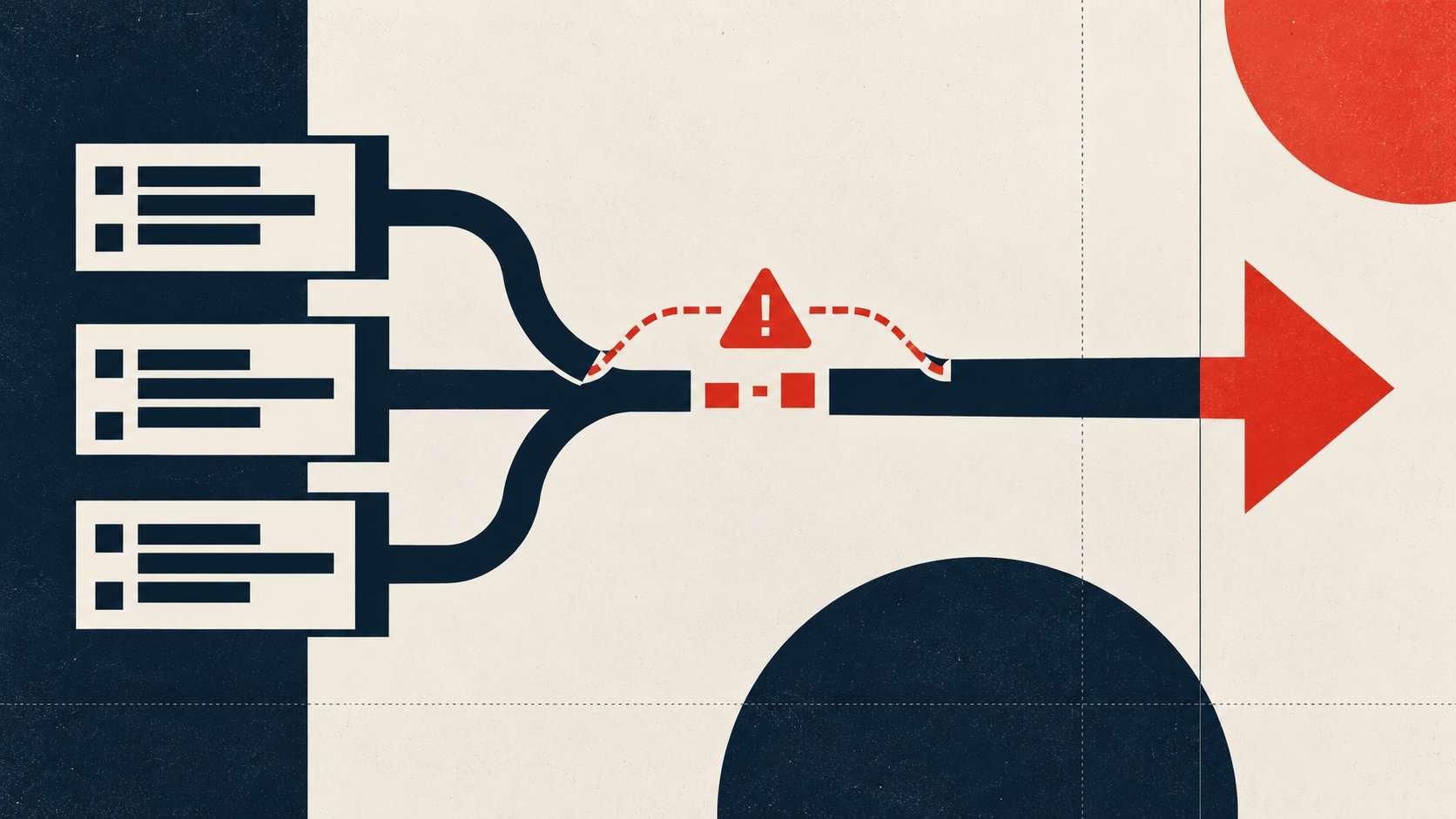

TL;DR: Model Context Protocol (MCP) is an open standard introduced by Anthropic in November 2024 that solves one of the most expensive problems in AI product development: connecting AI models to external tools, data sources, and business systems.
Before MCP, every integration required a custom connector, meaning 10 AI applications talking to 100 tools required up to 1,000 different integrations. MCP collapses that to a single protocol. By March 2025, OpenAI had adopted it. By mid-2025, Google DeepMind, Microsoft, and thousands of enterprise teams had followed. By December 2025, it was donated to the Linux Foundation and became vendor-neutral open infrastructure.
For SaaS founders and product teams, MCP is not a developer trend to watch from a distance, it is an architectural decision that is already shaping which products become platforms and which become obsolete.
The Problem MCP Was Built to Solve
To understand why MCP matters, you need to understand the problem that existed before it.
Every AI-powered product needs context. A customer support AI needs to read your ticketing system. A sales AI needs to pull from your CRM. A coding assistant needs access to your repository, your documentation, your deployment logs. For years, connecting an AI model to any external system required building a custom integration, specific to that model, that system, and that use case.
The result was what Anthropic called the N×M problem. If your product integrated with N AI models and M external tools, you potentially needed N×M separate connectors. As AI proliferated across product stacks, this grew quadratically.
Boston Consulting Group, in their analysis of MCP, described the consequence precisely: without a standard protocol, integration complexity rises quadratically as AI agents spread throughout an organisation. Every new tool, every new model, every new use case added another layer of bespoke engineering.
The practical effect was that truly connected AI products, ones that could reason across a company’s actual data, not just a static training snapshot — were expensive to build, brittle to maintain, and nearly impossible to scale. The companies that could afford the engineering overhead to build custom pipelines had a structural advantage. Everyone else shipped isolated, context-starved AI features and wondered why users did not engage.
MCP was built to end that dynamic.
What MCP Actually Is
MCP is an open protocol that standardises how AI systems connect to external data sources and tools.
The analogy that has stuck, used by both BCG and widely across the developer community, is USB-C for AI. Before USB-C, every device needed its own cable. After USB-C, one standard port works everywhere. MCP does the same thing for AI integrations.
Technically, MCP defines three components that work together. An MCP server is a lightweight service that wraps a data source or tool, a database, a CRM, a file system, a Slack workspace, a GitHub repository, and exposes it through a standardised interface.
An MCP client is an AI application or agent that connects to those servers. A host is the environment that manages those connections, a desktop application, an IDE, a product backend.
The protocol itself is built on JSON-RPC 2.0, taking design inspiration from the Language Server Protocol, the standard that transformed how code editors support programming languages by separating the language intelligence from the editor. MCP applies the same logic to AI: separate the intelligence from the data, and standardise the connection between them.
How Fast MCP Moved From Experiment to Infrastructure
Once a tool has an MCP server, any MCP-compatible AI model can use it without additional integration work. Once an AI application is an MCP client, it can connect to any MCP server without additional connectors. The N×M problem becomes N+M. Each side of the integration only needs to be built once.
The speed of MCP adoption is genuinely unusual in the history of developer standards. Most protocols take years to reach industry-wide adoption. MCP reached it in roughly twelve months.
Anthropic open-sourced MCP in November 2024, releasing it with SDKs for Python and TypeScript and pre-built servers for Google Drive, Slack, GitHub, Git, Postgres, and Puppeteer. Early adopters including Block and Apollo integrated it within weeks.
By March 2025, OpenAI, Anthropic’s primary competitor, officially adopted MCP across its Agents SDK, Responses API, and ChatGPT desktop app. This was the signal that MCP was not a vendor play but a genuine standard. Competing companies do not voluntarily adopt each other’s protocols unless the network effects are already too strong to resist. Sam Altman’s response at the time was simply:
“People love MCP and we are excited to add support across our products.”
April 2025 brought Google DeepMind’s confirmation of MCP support in Gemini models. May 2025 saw Microsoft and GitHub join MCP’s steering committee and announce Windows 11 support for the protocol.
The New Stack, which tracked the adoption closely, noted that the coalescing of Anthropic, OpenAI, Google, and Microsoft around a single standard was without recent precedent in the AI tooling space.
By late 2025, MCP server downloads had grown from roughly 100,000 at launch to over 8 million. The ecosystem had expanded to over 5,800 MCP servers covering tools across every major business function. Major deployments were running at Block, Bloomberg, Amazon, and hundreds of Fortune 500 companies.
In December 2025, Anthropic donated MCP to the Agentic AI Foundation, a directed fund under the Linux Foundation, co-founded by Anthropic, Block, and OpenAI. This governance transfer was significant: it signalled that MCP was no longer Anthropic’s protocol. It was shared infrastructure, in the same category as HTTP or TCP/IP, a standard no single company owns, and that every company building on AI can rely on.
What MCP Means for SaaS Product Strategy
For SaaS founders and product managers, MCP creates a strategic inflection point that operates on two levels simultaneously:
How your product integrates with AI, and how AI integrates with your product?
Your product as an MCP client
If your SaaS product uses AI to do anything, generate content, analyse data, make recommendations, route decisions, MCP determines how much context that AI actually has.
A product that connects to its data through MCP can give its AI model access to live CRM data, real-time analytics, user history, support tickets, and internal documentation, all through a single protocol. A product that relies on static inputs or one-off API calls delivers a fundamentally weaker AI experience.
The gap between these two approaches compounds over time as models improve: better models extract more value from richer context, making the integration layer a core competitive variable, not a commodity.
Your product as an MCP server
This is the more immediately strategic consideration for most SaaS companies. Building an MCP server for your product means that any AI agent or AI-powered application, including Claude, ChatGPT, Gemini, and any agentic framework, can natively access and interact with your product’s data and functionality.
Your product stops being an island that users have to navigate to manually and becomes a tool that AI agents can use on their users’ behalf. Salesforce data becomes queryable by an AI assistant. A project management platform becomes actionable by an autonomous agent. A design tool becomes accessible to a coding agent that needs to read brand guidelines.
The companies that build MCP servers now are making their products part of the agentic layer that sits above traditional software. The companies that do not are making a bet that their users will keep opening their application manually, in a world where AI agents are increasingly doing that work for them.
Practical Examples: What MCP Looks Like in Real Products
For a B2B SaaS company with a customer data platform:
Building an MCP server means an enterprise client's internal AI assistant can query customer segments, pull cohort analyses, and trigger list exports, without a human logging into the dashboard and navigating the UI. The product becomes programmable by AI, which is rapidly becoming a buyer requirement in enterprise sales cycles.
For a content or marketing SaaS:
An MCP server means AI writing assistants can pull brand guidelines, past campaign performance data, and audience segment information directly into the content generation workflow, without copy-paste or manual context-setting.
For an e-commerce platform: An MCP server exposing product catalogue, inventory, and order data means that AI agents handling customer service, personalisation, or reordering can access live product information without the platform needing to build individual integrations for each AI vendor a client uses.
For a developer tool: An MCP server wrapping your API documentation, changelog, and codebase means that coding assistants like Cursor, Windsurf, or Claude Code can give developers accurate, context-aware answers about your product, reducing support load and increasing the depth of integration your users build.
The concrete economics of this were captured by one developer writing for The New Stack, who described spending two weeks building a custom plugin to connect an AI assistant to an internal CRM, then replacing it entirely with an MCP server that took four hours to implement and worked with every AI model in the stack. That ratio, two weeks versus four hours, one integration versus universal compatibility, is the business case for MCP in a single example.

What MCP Means for Startups Building AI-Native Products
For startups building AI-native products from scratch in 2026, MCP changes the build-vs-integrate calculus significantly.
Before MCP, a startup building an AI product that needed to connect to five enterprise systems faced a choice: build five custom integrations and maintain them as those systems updated, or limit the product’s scope to avoid the integration burden. Both paths had real costs, engineering time in the first case, market ceiling in the second.
With MCP, if the enterprise systems in question already have MCP servers, and the major ones increasingly do, the integration cost approaches zero. The startup builds one MCP client, connects to the MCP ecosystem, and inherits all existing and future server integrations automatically.
This has a direct implication for how startups should think about their product surface. Features that previously required dedicated integration work can now be delivered as MCP connections. Roadmap capacity that would have gone to maintaining custom connectors can go to product differentiation instead.
And the startup’s own product, if it builds an MCP server, becomes part of the ecosystem that larger AI platforms and enterprise customers can connect to without custom work on either side.
For founders pitching to investors, MCP compatibility is also increasingly a signal of engineering maturity and platform-readiness. Enterprise buyers evaluating AI products are beginning to ask whether the product is MCP-compatible as part of their vendor assessment, in the same way they once asked about API availability and now ask about SSO support.
The Security Considerations Founders Cannot Ignore
MCP’s power comes from its ability to connect AI models to real systems with real data. That connection is also its most significant risk surface.
Security researchers who analysed MCP in April 2025 identified several classes of vulnerability that product teams need to account for.
The most consequential are prompt injection attacks, where malicious content in a connected data source manipulates the AI model’s behaviour, and tool-chaining attacks, where combining multiple MCP tools creates data exfiltration paths that no individual tool would permit on its own. A lookalike tool attack, where a malicious MCP server impersonates a trusted one, represents a third category that becomes more relevant as MCP server registries grow.
These are not theoretical risks. CVE-2025-49596, a real vulnerability in Anthropic’s own MCP Inspector tool, demonstrated that browser-based attacks could lead to remote code execution through an MCP surface.
The fact that the vulnerability was in Anthropic’s own tooling, and was patched, illustrates both that the risk is real and that the ecosystem is actively working to address it.
For product teams building with MCP, the practical implications are: implement explicit user consent flows before any MCP tool is invoked, enforce granular permissions at the server level rather than relying on the AI model to self-limit, treat all MCP server descriptions and annotations as untrusted input, and audit which tools can be combined in ways that create unintended data access paths.
The official MCP specification explicitly states that hosts must obtain explicit user consent before invoking any tool, this is not optional guidance but a protocol requirement.
An emerging category of enterprise security tooling has grown up specifically around MCP governance, vendors offering MCP gateways, observability layers, and identity management specifically for agentic AI environments. For startups building MCP-connected products for enterprise clients, understanding this landscape is part of the product due diligence that enterprise buyers will conduct.
The Governance Shift and What It Means Long-Term
The transfer of MCP to the Linux Foundation in December 2025 deserves more attention than it has received in most coverage of the protocol.
When Anthropic, OpenAI, and Block jointly contributed MCP to a neutral foundation backed by AWS, Google, Microsoft, and Cloudflare, they were making a structural commitment: the connection layer for AI agents will not be owned by any single vendor.
This is the same governance model that produced HTTP, TCP/IP, and the Language Server Protocol, open standards that became so foundational that no company could afford to compete against them, only build on top of them.
The business implication is that MCP is not a product feature that any AI company will deprecate or lock behind a paywall. It is infrastructure. Building your product’s AI integrations on MCP is not a bet on Anthropic’s roadmap, it is a bet on an open standard with Linux Foundation governance and cross-industry adoption. That is a fundamentally different risk profile than building on a proprietary integration framework.
The November 2025 protocol update added asynchronous operations, statelessness, server identity verification, and an official community-driven registry for discovering MCP servers. These additions addressed the production-readiness gaps that early adopters had identified and signalled that the protocol’s governance body was iterating based on real deployment experience rather than theoretical design.
Where MCP Is Not the Right Answer
The case for MCP is strong, but it is not universal. There are real scenarios where adopting MCP adds friction rather than removing it, and founders should be honest about them.
Performance-sensitive, high-frequency integrations
MCP introduces a protocol layer between the AI model and the data source. For most use cases that overhead is negligible. For latency-critical applications, real-time trading systems, high-frequency analytics pipelines, sub-100ms response requirements, the abstraction cost matters. A direct API call to a well-optimised endpoint will outperform an MCP-mediated equivalent. Teams in those contexts may be better served building lean custom connectors than adopting a general-purpose protocol.
Heavily regulated industries with strict data governance requirements
Financial services, healthcare, and government deployments often operate under data residency rules, audit trail requirements, and access control frameworks that MCP’s current architecture does not natively address. The protocol is evolving quickly, enterprise authentication, observability, and compliance tooling is being built around it, but as of 2026 it still requires additional layers to satisfy the governance requirements of the most regulated environments.
A hospital system evaluating MCP for clinical AI tools faces a more complex compliance picture than a SaaS startup building a marketing assistant.
Small teams early in product development
MCP adds architectural complexity. For a two-person team building a focused product with one or two integrations, the overhead of implementing the protocol correctly may not be justified by the integration surface it unlocks.
A well-written direct integration can be faster to ship and easier to reason about when the team is small and the integration scope is narrow. MCP’s value scales with integration breadth; below a certain threshold, it is abstraction for abstraction’s sake.
Proprietary extension risk
The Linux Foundation governance is a strong signal, but vendor-specific MCP extensions are already appearing. Major platforms adopting MCP may build proprietary capabilities on top of the open standard, capabilities that work only within their ecosystem.
This is how open standards have historically fragmented before: the core survives, but the value migrates to proprietary layers built on top. It has not happened to MCP yet, and the Linux Foundation governance makes it harder. But teams building long-term product strategy should watch for it.
None of these caveats reverse the overall trajectory. They do suggest that “adopt MCP” is a decision that should follow a specific assessment of your integration complexity, performance requirements, and regulatory context, not a reflex triggered by industry momentum alone.
What Product Teams Should Do Now
For product managers and engineering leads who have not yet made an MCP decision, the question in 2026 is rapidly becoming hard to ignore whether to engage with MCP, in which order and at what pace.
The starting point for most SaaS companies is an audit of two things: which external tools and data sources your AI features currently depend on, and which AI models or agents your users might want to connect your product to. The first tells you where to prioritise building or adopting MCP server connections. The second tells you whether building your own MCP server should be on the near-term roadmap.
For companies already building with AI APIs, the incremental cost of becoming MCP-compatible is low relative to the integration surface it unlocks. The TypeScript and Python SDKs are production-ready, Microsoft collaborates on the C# SDK, and the official documentation at modelcontextprotocol.io provides implementation guides across all major languages and frameworks.
For companies evaluating AI product strategy at the founder or CTO level, the strategic question is simpler: in a world where AI agents are increasingly how users interact with software, does your product want to be one of the tools those agents can use, or does it want to require that users still come to it manually? MCP is the technical answer to that question. The business decision is whether to make that answer yes now or later.
Resources
- Anthropic, “Introducing the Model Context Protocol”, November 2024: anthropic.com
- Model Context Protocol, Official Documentation and Specification: modelcontextprotocol.io
- Model Context Protocol, Official GitHub Repository (Linux Foundation): github.com
- Wikipedia, “Model Context Protocol” — adoption timeline, governance, and technical architecture: en.wikipedia.org
- Boston Consulting Group, “Put AI to Work Faster Using Model Context Protocol”: bcg.com
- Andreessen Horowitz (a16z), “A Deep Dive Into MCP and the Future of AI Tooling”, March 2025: a16z.com
- The New Stack, “Why the Model Context Protocol Won”, December 2025: thenewstack.io
- The New Stack, “Goodbye Plugins: MCP Is Becoming the Universal Interface for AI”, December 2025: thenewstack.io
- The New Stack, “MCP’s Biggest Growing Pains for Production Use Will Soon Be Solved”, January 2026: thenewstack.io